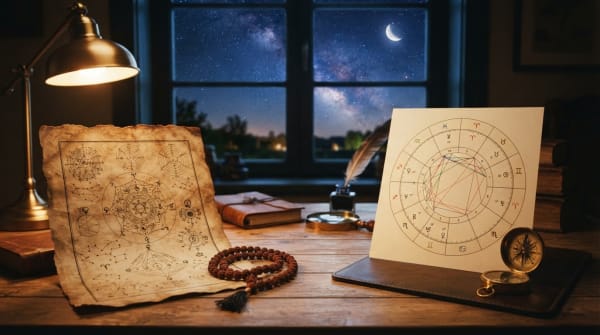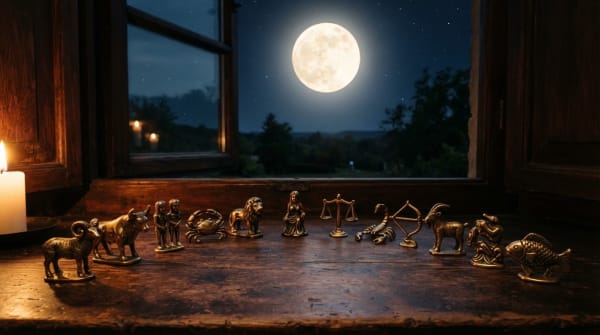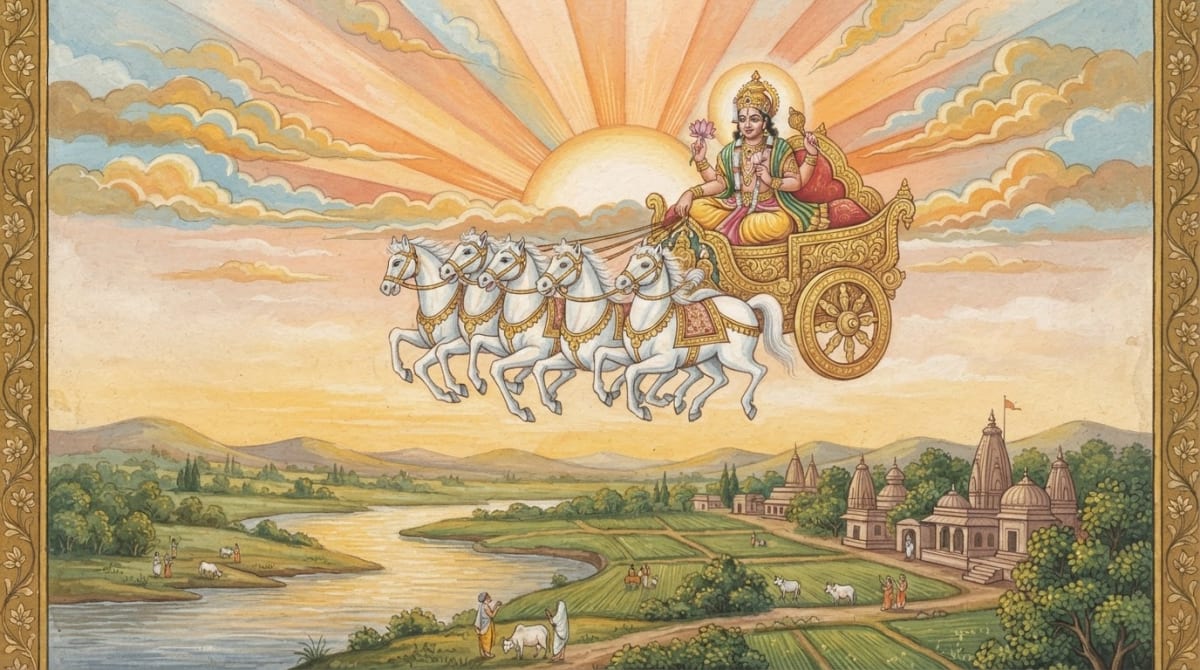
When people search for “sun in astrology,” they often expect a simple answer: it is your star sign. In Vedic astrology (Jyotish), the Sun, called Surya, is much deeper. The Sun represents the soul, core vitality, father, authority, leadership, and conscious will. Its placement in your birth chart shows how you express your individuality, not just which zodiac sign you were born under.
Vedic astrology maps the sky using the sidereal zodiac, which is tied to the fixed stars, while Western astrology commonly uses the seasonal tropical zodiac. This is why your Vedic Sun sign can differ from your Western Sun sign. To know your Vedic Sun placement accurately, you need your birth date, time, and place. Without those details, a general reading can be interesting, but it cannot claim to describe your Kundli.
Sun in Astrology: More Than a Star Sign
In Jyotish, the Sun is counted among the grahas (planets), even though astronomically it is a star. The word graha means “seizer” or “influencer.” Because Vedic astrology studies the sky from the Earth’s perspective, the Sun appears to move through the twelve signs, and that apparent journey becomes a guiding light in the chart.
The Sun is a warm, fiery graha. Classical texts associate it with the heart, inner radiance, courage, and the capacity to take charge. Traditional associations also link the Sun to digestion and vitality, but these are symbolic descriptions from an astrological worldview, not medical advice.
The Sun’s natural significations include:
- Atma, or the soul, and the sense of “I”
- Self-confidence, ego, honour, and dignity
- Father, father figures, and teachers
- Government, authority, and public office
- Leadership, visibility, and recognition
- Vitality, courage, and inner fire
- Gold, rubies, and generous self-expression
These meanings overlap. In a particular chart, some will be stronger than others depending on the Sun’s sign, house, nakshatra, aspects, and dasha.
The Sun in Your Birth Chart: The Soul’s Signature
The Sun’s house shows where your life energy expresses itself. Its sign shows how you colour that expression. Its nakshatra (birth star) adds a finer texture, and its dasha periods indicate when solar themes are likely to be active.
Because the Sun represents the soul in many traditional readings, it is often connected with your dharma, or core purpose. It is not the same as the Moon sign, which relates to the mind, emotions, and daily habits. It is also different from the Lagna (rising sign), which points to the physical body, appearance, and first impressions. If you want to compare these layers, see our article on the difference between sun, moon and rising signs. To understand where they fit in a chart, our beginner’s guide to reading a Kundli walks through the main elements step by step.
Sun, Moon, and Lagna: Why They Are Not the Same
Beginners often ask which is more important: Sun, Moon, or Lagna. Vedic astrologers usually treat the Lagna as the anchor, the Moon as the mind, and the Sun as the soul. There is no fixed winner, because the three work together. The Lagna shows how you meet the world, the Moon sign shows how you process experience, and the Sun sign shows what you are ultimately trying to express.
For example, two people can share the same Sun sign and still be quite different if their Moon signs and Lagnas differ. That is why a complete reading always looks at the whole chart rather than one placement.
Sun in the 12 Houses: Where the Light Falls
The houses of a Kundli represent different life areas. The Sun in a house reveals where you are naturally visible, where you may take on responsibility, and where issues of identity and authority often arise. Think of the house as the stage and the sign as the costume.
| House | What the Sun highlights | | 1st | Self-image, presence, confidence, physical vitality | | 2nd | Speech, family values, wealth and personal resources | | 3rd | Courage, initiative, communication, siblings | | 4th | Inner peace, home, mother, emotional foundation | | 5th | Creativity, romance, education, intelligence | | 6th | Service, daily routines, work, conflict resolution | | 7th | Partnerships, marriage, public dealings and one-to-one bonds | | 8th | Transformation, shared resources, research and renewal | | 9th | Philosophy, faith, higher learning, life direction | | 10th | Career, public life, reputation and contribution | | 11th | Community, networks, goals, long-term gains | | 12th | Solitude, introspection, release and spiritual growth |
This table is only a starting point. In practice, an astrologer weighs the Sun’s sign, dignity, aspects from other planets, and conjunctions. For a fuller tour of the life areas, you can explore our beginner’s guide to the 12 houses in astrology.
Sun Sign, Exaltation, and Debilitation
In Vedic astrology, each planet has places where it feels at ease and places where it is challenged. The Sun is considered strong and dignified in Leo, its own sign. It is exalted in Aries and debilitated in Libra. Exaltation is traditionally read as a clear, heightened expression; debilitation suggests a more restrained or conflicted one. Still, dignity alone does not determine a person’s worth or destiny. A debilitated Sun can be refined through awareness, effort, and traditional remedies.
The Sun’s Nakshatra and Dasha
The Sun rules three nakshatras in the Vimshottari dasha system: Krittika, Uttara Phalguni, and Uttara Ashadha. If your birth Moon is in one of these, the Sun’s energy is woven into your emotional and mental nature in a particular way. Each nakshatra has its own symbol, deity, and story, which is why birth stars are such a rich layer of Vedic astrology. If you are new to this topic, our Nakshatra 101 guide is a good place to begin.
Dasha is the timing system Vedic astrologers use to see when planetary themes may unfold. In the widely used Vimshottari system, the Sun Mahadasha runs for six years. A Sun dasha can bring themes of leadership, career, confidence, father figures, or identity into focus. How it appears depends on the Sun’s placement and the Antardashas (subperiods) running inside it. A dasha is not a promise of success or failure; it is a season of emphasis.
Remedies and Practices Connected to the Sun
Traditional Vedic astrology offers respectful ways to work with the Sun’s energy. These are not magic solutions, but they can support inner alignment and steady self-reflection.
- Offer water to the rising Sun in the morning, a simple practice called Arghya.
- Practise Surya Namaskar, the sun salutation, as part of a morning routine. It is a physical and spiritual practice many use to cultivate warmth and energy.
- Chant a traditional mantra, such as “Om Suryaya Namah,” if a teacher or astrologer has guided you to do so.
- Wear a ruby (Manikya) only after consulting a qualified astrologer who has seen your full chart. Gemstones are traditionally treated as strong remedies, not fashion accessories.
- Cultivate the Sun’s qualities in daily life: honesty, leadership, generosity, and respect for father figures and teachers.
None of these practices is a substitute for professional advice. If you are facing medical, financial, or relationship problems, address them with the appropriate experts while using astrology as a reflective tool.
An Honest Note on Predictions
Astrology, in the Vedic tradition, is an interpretive and spiritual system. It is not a scientifically proven way to predict events. No single planetary placement causes marriage, career success, wealth, or health. A good reading can offer insight into tendencies, timing, and growth areas, but your choices, environment, and relationships also shape your life.
When you read about the Sun’s meaning, remember that it is one voice in a larger chorus. A Sun placement that looks weak on paper can shine through a helpful Moon, a strong Lagna, or supportive dasha periods. Similarly, a strong Sun still benefits from self-awareness and right action.
Conclusion
The Sun in Vedic astrology is the image of your inner light. It represents who you are becoming, the authority you can own, the father figures who shaped you, and the vitality you bring to your life. Learning about your Sun sign, house, nakshatra, and dasha is a powerful way to understand your own tendencies, but it works best when seen in the full context of your Kundli.
If you would like to explore further, a tool like YogiAI.live can help you begin mapping your Sun, Moon, Lagna, and dasha periods in one place. Use it as a starting point, then let the whole chart tell its story.
Frequently asked questions
What does the Sun represent in Vedic astrology?
The Sun represents the soul, core vitality, self-confidence, authority, father, leadership, and the conscious sense of identity. In a birth chart, its sign, house, nakshatra, and dasha show where and how these themes appear. It is one of several grahas, so it is read in context with the rest of the chart.
Is the Sun sign more important than the Moon sign in Vedic astrology?
Vedic astrologers generally treat the Lagna (rising sign) as the chart's anchor, the Moon sign as the mind, and the Sun sign as the soul. There is no single most important placement. Your Sun sign describes your core purpose and inner authority, while the Moon sign reflects your emotions and mental habits.
What does a weak Sun mean in a Kundli?
In traditional readings, a weak or debilitated Sun can suggest low confidence, issues with authority, or difficulty expressing leadership. It is not a verdict on your life. Awareness, thoughtful choices, traditional remedies, and support from other planets can change how the Sun's energy unfolds.
Which Nakshatras are ruled by the Sun?
In the Vimshottari dasha system, the Sun rules Krittika, Uttara Phalguni, and Uttara Ashadha. If your birth Moon falls in one of these nakshatras, the Sun's symbolism is closely connected to your emotional and mental nature. Each nakshatra adds its own deity and story to the interpretation.
How long is the Sun Mahadasha in Vedic astrology?
In the widely used Vimshottari dasha system, the Sun Mahadasha lasts six years. Its effects depend on the Sun's placement, dignity, and the Antardashas running within it. A Sun dasha often brings identity, career, father, and authority themes into focus, but it is not a guarantee of specific events.
Which gemstone is associated with the Sun in Vedic astrology?
The ruby, known as Manikya, is traditionally associated with the Sun. Gemstones are considered strong remedies in Jyotish, so they should only be chosen after a qualified astrologer examines your full chart. They are not a substitute for practical, medical, or financial advice.