If you have ever compared your Sun sign in a horoscope app with your Vedic sign, you might have noticed a shift—sometimes a whole sign difference. This is because Vedic and Western astrology are two distinct systems that start from different foundations. While both use your birth date, time, and place to create a chart, they interpret the sky, the zodiac, and planetary influences in very different ways. This article explains the key differences between Vedic astrology (also called Jyotish) and Western astrology, covering zodiac systems, chart calculations, timing methods, and focus areas, so you can understand which approach resonates with you—or how to use both.
What Is Vedic Astrology (Jyotish)?
Vedic astrology, or Jyotish (the science of light), is an ancient Indian system that has been practiced for thousands of years. It is rooted in the Vedas and integrates astronomy, mathematics, and spiritual philosophy. Unlike Western astrology, which evolved in Greece and Rome with an emphasis on personality, Vedic astrology is deeply tied to concepts of karma, dharma, and reincarnation. It sees the birth chart as a map of your soul’s journey—a record of past actions and the seeds of future experiences.
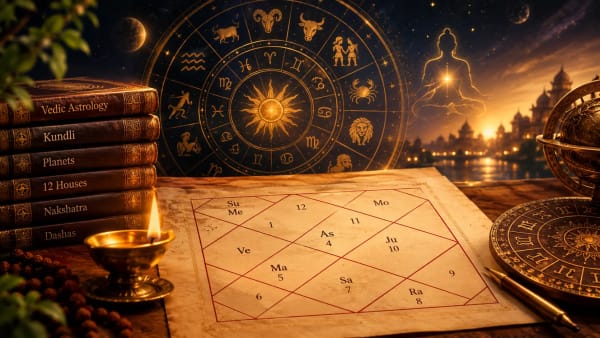
In Vedic astrology, the Kundli (birth chart) is calculated using the sidereal zodiac, which is based on the actual constellations in the sky. The Lagna (ascendant or rising sign) and the Moon sign are considered more important than the Sun sign. The chart is read from the Lagna, and each of the 12 houses represents specific life areas, such as career, relationships, and health. Vedic astrology also uses a sophisticated system of planetary periods called Dashas to time events. To get an accurate Vedic chart, you need your exact birth date, time, and place—this is crucial for determining the Lagna and house placements. If you are new to this, learning how to read your Kundli is the best starting point.
How Does Vedic Astrology Work?
Vedic astrology works on the principles of the sidereal zodiac, which is divided into 12 signs and 27 Nakshatras (lunar mansions). The position of the Moon at the time of birth in a Nakshatra is called your Janma Nakshatra, and it reveals subtle emotional patterns and life path. Your Moon sign and rising sign are the two pillars of a Vedic reading. The Vimshottari Dasha system is a unique timing technique: it allocates certain years to each planet based on the Moon’s Nakshatra at birth. These major planetary periods (Mahadashas) and sub-periods (Antardashas) provide a timeline of themes and events in your life.
For example, if your Mahadasha is Saturn, you might experience lessons in discipline, work, and patience; if it is Venus, you may see more focus on relationships, creativity, and comfort. The houses, planets, and aspects are also interpreted from the Lagna, making the rising sign extremely significant. Many people find that Vedic astrology feels more predictive and practical, especially for questions like “when will I get married?” or “will this career succeed?” It offers a structured framework for understanding life’s cycles. To deepen your understanding, explore your Moon sign and rising sign in Vedic terms—they often reveal more than your Sun sign.
What Is Western Astrology?
Western astrology is the system most familiar to modern readers through daily horoscopes and personality profiles. It uses the tropical zodiac, which is aligned to the seasons and the Sun’s position on the equinoxes. The tropical zodiac begins with Aries at the spring equinox, making it a seasonal calendar rather than a star-fixed map. In Western astrology, the Sun sign—the sign the Sun occupied at birth—is considered the core of your identity. The chart uses a variety of house systems, with Placidus being the most common. Western astrology focuses on psychological patterns, personal growth, and self-awareness. Transits (the current positions of planets relative to your birth chart) and progressions are the main timing methods, rather than dashas. It also includes the outer planets—Uranus, Neptune, and Pluto—which are not used in Vedic astrology. Western astrology is often viewed as more “analytical” and less fatalistic, encouraging you to work with your astrological energies rather than accept a predetermined fate.
Key Differences Between Vedic and Western Astrology
The table below summarizes the major differences:
| Aspect | Vedic Astrology (Jyotish) | Western Astrology |
|---|---|---|
| Zodiac | Sidereal (based on fixed stars) | Tropical (based on seasons) |
| Primary Sign | Moon sign and rising sign (Lagna) | Sun sign |
| Chart Calculation | Whole-sign houses | Placidus or other quadrant systems |
| Timing System | Dashas (Vimshottari) and transits | Transits and progressions |
| Focus | Karma, life purpose, timing of events | Personality, psychology, self-development |
| Planets Used | 9 (including Rahu and Ketu) | 10 (including Uranus, Neptune, Pluto) |
| Remedies | Gemstones, mantras, rituals | Often none, or psychological counselling |
Sidereal vs Tropical Zodiac
The most fundamental difference is the zodiac. Vedic astrology uses the sidereal zodiac, which points to the actual constellations in the sky. Western astrology uses the tropical zodiac, which is fixed to the seasons. The difference between the two is called the ayanamsa, and it is roughly 24 degrees. This means your Vedic Sun sign is often one sign behind your Western Sun sign. For example, if you are a Taurus in Western astrology, you may be an Aries in Vedic astrology. This shift affects not only the Sun sign but also the Moon sign, rising sign, and all planetary placements. To find your Vedic signs, you need to subtract the ayanamsa from your tropical positions—a calculation best done with Vedic astrology software or a Kundli generator.
House Systems and Placement
Vedic astrology typically uses whole-sign houses, where the Lagna sign becomes the first house, and each following sign is the next house. This creates a clean, sign-based system. Western astrology often uses the Placidus house system, which divides the sky into unequal houses based on time and location. This can result in intercepted signs and complicated cusps. Because of this, houses in a Western chart may have different meanings than in a Vedic chart, even for the same birth data. Your rising sign also holds different weight: in Vedic, it is the starting point of everything; in Western, it is just one of many factors.
Timing of Events
Vedic astrology’s dasha system is unique. The Vimshottari dasha divides your life into planetary periods based on the Moon’s Nakshatra at birth. Each planet rules a certain number of years, and within each major period, sub-periods unfold. This gives a very specific timeline of when certain life themes are likely to arise. Western astrology relies on transits—the movement of planets in the sky—and progressions, which are symbolic movements of the chart. Transits are believed to activate natal placements over days, months, or even years, but they are not structured into fixed periods like dashas. This is why Vedic astrology often seems more precise regarding the timing of events such as marriage, career changes, or financial shifts.
Interpretive Focus and Remedies
Vedic astrology emphasizes karma and lifelong purpose. It often prescribes remedies—such as wearing a specific gemstone, chanting a mantra, performing a puja, or practicing charity—to pacify malefic planets or strengthen benefic ones. These remedies are meant to encourage self-improvement, not to guarantee outcomes. Western astrology focuses on personal agency and psychological understanding. It may suggest lifestyle changes, mindfulness, or therapy as ways to integrate planetary energies. Neither system claims to be scientifically proven; they are interpretive traditions that can offer guidance and reflection. It is important to approach any remedy or advice with a grounded perspective and never ignore professional medical or financial advice.
Which System Is Right for You?
There is no objective winner. Both systems have value, and many people use them together for a richer picture. Vedic astrology is often appreciated for its predictive power and spiritual depth, especially for questions about marriage, career, and major life transitions. Western astrology is valued for its psychological insights and emphasis on personal growth. If you are curious, start by learning about your Vedic Moon sign, rising sign, and Nakshatra. You might find that the Vedic descriptions of your emotional nature and life path feel surprisingly accurate. You can also compare your Western chart with your Vedic chart to see the differences. Understanding the 12 houses in Vedic astrology can give you a structured way to analyze life areas, and this works well regardless of the system you prefer.
Conclusion
Vedic and Western astrology differ in their zodiac systems, birth chart calculations, timing methods, and interpretive focus. Vedic astrology uses the sidereal zodiac, emphasizes the Moon and rising signs, employs dashas for timing, and often includes remedies. Western astrology uses the tropical zodiac, focuses on the Sun sign, uses transits and progressions, and leans toward psychological exploration. Recognizing these key differences helps you choose the lens that resonates with you—or combine both to gain a deeper understanding of your life and growth. Remember, astrology offers perspective, not certainty. As you explore, keep an open mind and use the insights as one tool among many on your journey.
Frequently asked questions
Which is more accurate: Vedic or Western astrology?
Neither is objectively accurate; both are interpretive systems. Many people find Vedic astrology more predictive for life events, while Western astrology offers deeper psychological insights. The best approach is to explore both and see which resonates with your experience.
Why are my Vedic and Western Sun signs different?
Vedic astrology uses the sidereal zodiac, which is based on fixed stars, while Western astrology uses the tropical zodiac, tied to the seasons. The ayanamsa, a difference of about 24 degrees, shifts your Sun sign back by one in the Vedic system.
How does Vedic astrology use dashas?
Dashas are planetary periods determined by the Moon's Nakshatra at birth. The Vimshottari dasha divides life into major periods (Mahadashas) and sub-periods (Antardashas), each ruled by a planet, indicating themes and timing of events.
Can I use both Vedic and Western astrology together?
Yes, many practitioners combine them. Use Vedic astrology for timing and karmic insights, and Western astrology for psychological understanding. This integration often provides a more holistic view of your life and challenges.
What is the ayanamsa?
The ayanamsa is the angular difference between the tropical and sidereal zodiacs, roughly 24 degrees. It causes the Vedic signs to be about one sign behind Western signs, affecting all planetary positions in the chart.
Do I need my exact birth time for Vedic astrology?
Yes, an accurate birth time is essential for calculating your rising sign (Lagna) and house positions, which are central to Vedic readings. Even a few minutes difference can change your Lagna and the entire chart layout.