Ahoi Ashtami 2026 will fall on Sunday, 1 November 2026. This traditional Hindu festival, observed on the Krishna Ashtami tithi in the month of Ashwin (amanta) / Kartik (purnimanta), is kept mainly by mothers who fast for the wellbeing and long life of their children. In this guide, you will learn the date, the vrat katha, the religious and astrological significance of the day, and a simple, respectful way to observe the Ahoi Ashtami vrat at home. Because customs vary from family to family and region to region, treat this guide as a starting point — not a fixed rule.
Ahoi Ashtami 2026: Date and When to Celebrate
As mentioned above, Ahoi Ashtami 2026 will be observed on Sunday, 1 November 2026. The tithi is Krishna Ashtami of Ashwin (amanta) / Kartik (purnimanta), computed for New Delhi. The festival comes during the waning phase of the moon, in the same autumn stretch as Karwa Chauth 2026 and the lead-up to Diwali.
Unlike Karwa Chauth, which is traditionally observed for a husband's longevity, Ahoi Ashtami is devoted to the protection and wellbeing of children. Some families observe the fast for all children in the home; others involve grandparents and older siblings in the puja.
Because the exact muhurat, puja window, and parana (breaking the fast) time depend on the moonrise and the tithi in your specific city, we do not list a single timing here. Please check a local Panchang or a trusted Panchang app for the Ahoi Ashtami puja and parana timings in your city — the difference between cities can be significant.
The Story Behind Ahoi Ashtami: The Vrat Katha
The best-known Ahoi Ashtami vrat katha tells of a woman who lived near a forest. One day, while digging soil — some versions say clay for household use — her axe or spade accidentally struck and killed a lion cub resting in a den. The grieving mother lioness appeared and demanded why her child had been harmed. The woman begged forgiveness, but the lioness replied that a mother's pain cannot be undone, and that the woman, too, would lose her children.
Time passed, and the woman's children began to fall ill, one by one. Distraught, she remembered the lioness's words. In her sorrow, she called upon Ahoi Mata — the protective mother goddess — and prayed with total surrender. Ahoi Mata, moved by her repentance, taught her to observe a fast on Krishna Ashtami and to honour all mothers of the forest. When the woman kept the vrat with devotion, her children recovered and peace returned to her home.
The katha is remembered differently in different regions: in some versions, Ahoi Mata herself appears as the lioness; in others, she is a goddess with a deer-like face who watches over the night sky. The lesson remains the same — compassion for every creature, sincere repentance, and the protective power of a mother's prayer.
Religious and Astrological Significance of Ahoi Ashtami
Krishna Ashtami — the eighth day of the waning moon — is considered a time of inner cleansing in the Hindu calendar. The moon is steadily shrinking, which in Jyotish (Vedic astrology) is often associated with letting go, reflection, and turning inward. Festivals on this tithi ask us to honour what is quiet and nurturing rather than loud and external.
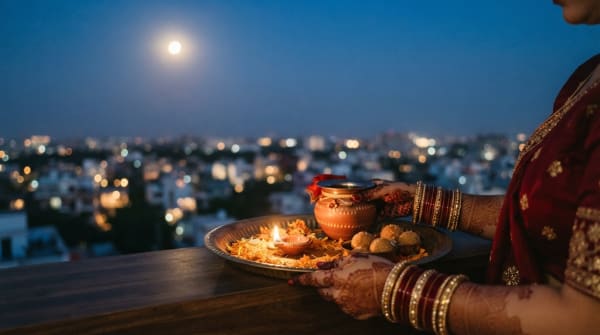
The deity of the day is Ahoi Mata, a mother goddess sometimes shown with a deer-like face or with stars around her. She represents protection, patience, and the boundless care of a mother for her child — human or animal. Her connection with the night sky is one reason the festival is tied to stars and moonrise in many regions, and why the fast is traditionally broken only after these appear.
In a deeper astrological sense, the festival resonates with the fifth house (putra bhava) of a Kundli, which relates to children, creativity, and inherited blessings. It is important to understand that Vedic astrology does not claim any single house or planet determines whether someone will have children, or what kind of life those children will lead. A chart is read as a whole — with the Lagna, the condition of the Moon, the Nakshatras, and the running Dasha periods all considered together. If you are beginning to explore this, our guide to the 12 houses in astrology is a friendly place to start.
The festival also falls in Sharad ritu — the autumn season — a threshold between the rains and winter, and a traditional time for gratitude, harvest blessings, and preparing the home for Diwali. The sky at this time of year is famously clear, which makes the sighting of stars and the moon a natural part of the ritual.
Finally, like all authentic folk festivals, Ahoi Ashtami is a living tradition. It blends mythology, devotion, and seasonal rhythm, and it does not claim to be a scientifically measurable method. It carries meaning because generations have kept it with love.
How Ahoi Ashtami Is Observed Across Regions
Ahoi Ashtami is most widely observed in North India — especially Punjab, Haryana, Uttar Pradesh, Rajasthan, and among North Indian communities in Gujarat and other states.
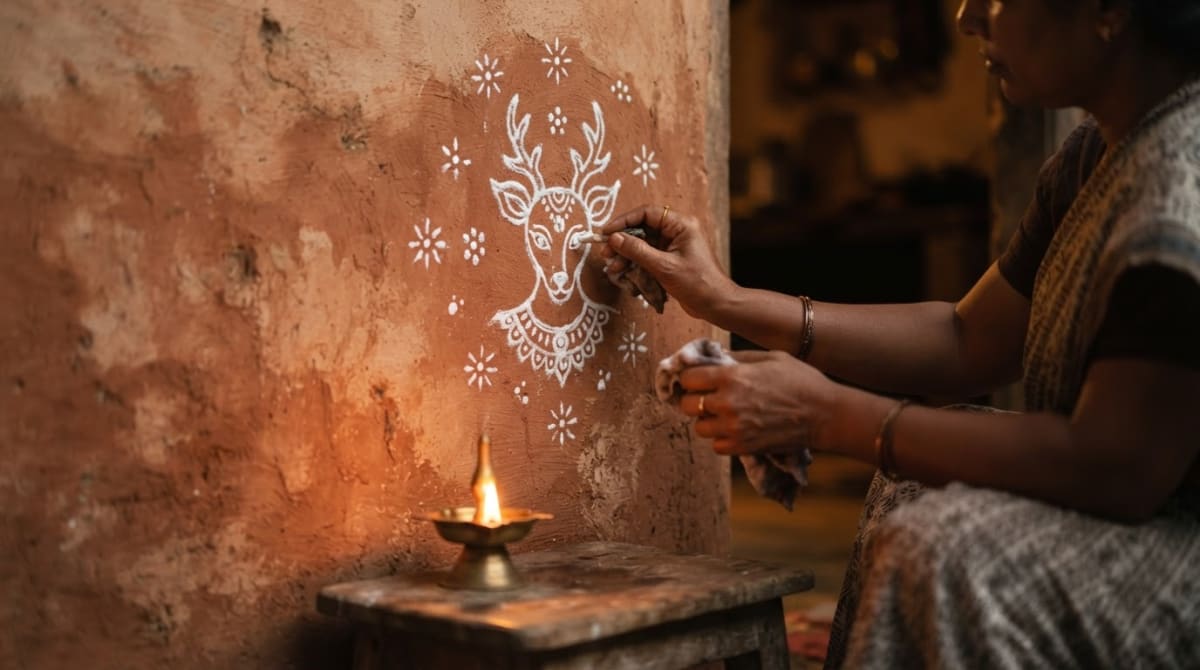
In many homes, women decorate the puja wall with rice flour or vermilion, drawing the face of Ahoi Mata and sometimes small star shapes around her. Because the goddess is associated with the night sky, the drawing is traditionally made while facing east or in the room where the stars can be imagined overhead.
Fasting customs vary. Some women observe a nirjala vrat — no food or water from sunrise until the parana. Others allow water, fruit, or a single simple meal (phalahar) during the day. There is no single correct rule; family tradition and the guidance of elders decide.
In urban households, wall paintings have often been replaced by printed images of Ahoi Mata or a puja thali with the goddess's image. In villages, the older custom of painting the wall remains alive, and the whole family may gather around it in the evening.
In parts of Rajasthan, the festival also includes respect for cattle and crops, reflecting the katha's message of care for animals. In Gujarat and Maharashtra, some communities observe Ahoi Ashtami with their own local stories and timings.
Always follow your family's custom or your local priest's guidance over any general description.
A Simple and Respectful Ahoi Ashtami Ritual Guide
If you are wondering how to observe Ahoi Ashtami 2026 at home, here is a simple outline you can adapt.
Before the festival:
- Decide, with your family, whether you will fast and in what way. If in doubt, ask an elder or your family priest.
- Clean the room or corner where you will pray.
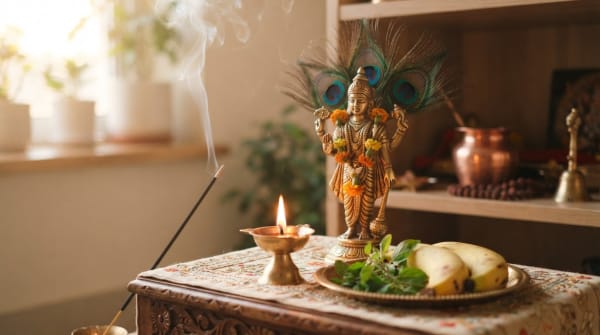
- Keep ready a small image of Ahoi Mata — printed, painted, or drawn with rice flour or vermilion on the wall.
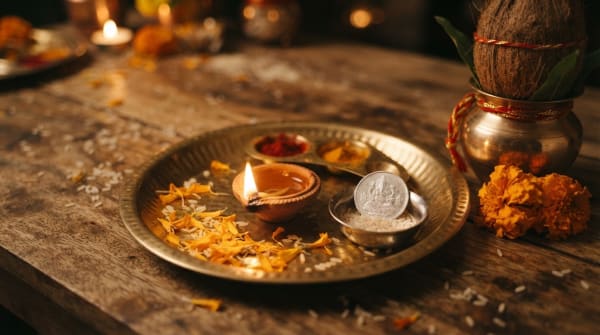
- Prepare simple offerings: water, seasonal fruit, sweets, and a ghee lamp.
During the puja:
- Light the lamp and offer water to the image of Ahoi Mata.
- Place the fruit and sweets in front of her and sit quietly for a few moments.
- Recite or listen to the Ahoi Ashtami vrat katha in any language you understand.
- Offer your own simple prayer — for the wellbeing of children in your family, for your own growth, and for kindness toward animals and nature.
After the puja:
- Check a local Panchang for the parana time in your city. This is usually tied to moonrise or the appearance of stars, times that differ by location.
- Break the fast gently with sattvic food — something light, warm, and simple.
A ritual is not a transaction. The value of Ahoi Ashtami lies in the attention, tenderness, and humility you bring to it, not in performing steps perfectly.
What to Reflect On This Ahoi Ashtami
Ahoi Ashtami invites you to pause and notice the quiet, protective love that surrounds children in your life — and to extend the same care to animals and the natural world, as the katha teaches. It is also a reminder that mothers, in all traditions, carry a unique form of courage: the willingness to pray for another person's safety before their own.
For those curious about Jyotish, this festival is a beautiful entry point. You can explore your own Kundli to understand what Vedic astrology says about your strengths, your relationships, and the areas of life that matter to you. Our beginner's guide on how to read your Kundli explains the basics step by step. You might also enjoy learning about the Nakshatras — the birth stars — since the night sky is so central to Ahoi Ashtami.
Remember: astrology and festivals are tools for reflection, not fixed decrees. No single chart, placement, or fast can guarantee an outcome. What matters is the sincerity you bring.
Conclusion
Ahoi Ashtami 2026 will fall on Sunday, 1 November 2026. Whether you keep a strict fast, paint the face of Ahoi Mata on a wall, or simply light a diya and remember the katha, the spirit of the day is the same — gratitude for children, compassion for all creatures, and trust in a mother's love.
Check your local Panchang for the puja and parana timings in your city, listen to the vrat katha with a quiet heart, and let the festival be whatever your family tradition makes it. For more Vedic astrology and spiritual guidance, visit YogiAI.live.
Frequently asked questions
When is Ahoi Ashtami in 2026?
Ahoi Ashtami 2026 falls on Sunday, 1 November 2026. It is observed on the Krishna Ashtami tithi of Ashwin (amanta) / Kartik (purnimanta). For exact puja and parana timings, check a local Panchang for your city.
What is the Ahoi Ashtami vrat?
The Ahoi Ashtami vrat is a traditional fast kept mainly by mothers for the wellbeing and long life of their children. Some people fast without water until moonrise or star sighting, while others eat a single light meal. Family customs vary.
Who is Ahoi Mata?
Ahoi Mata is a protective mother goddess honoured on Ahoi Ashtami, often shown with a deer-like face or surrounded by stars. In the vrat katha, she teaches compassion for all creatures and forgives a mother's unintended harm.
Can anyone observe Ahoi Ashtami, even without children?
Yes. The festival is traditionally kept by mothers, but its prayers for wellbeing and its message of compassion are open to everyone. Many families gather for the puja and katha even if only one member fasts.
What should I offer to Ahoi Mata during the puja?
Common offerings include water, seasonal fruits, sweets, and a ghee lamp. In many homes, women draw the face of Ahoi Mata and stars with rice flour or vermilion. Offerings vary by region and family tradition.
Is Ahoi Ashtami the same as Karwa Chauth?
No. Karwa Chauth is observed mainly for a husband's longevity, while Ahoi Ashtami is traditionally for children's wellbeing. They fall close together in the autumn calendar and share similar fast-and-moonrise customs, but the deities and intentions differ.